If you drive a newer vehicle, you already know how much technology is packed into it. Cameras in the windshield. Radar behind the bumper. Blind-spot sensors in the quarter panels. Your vehicle is basically a rolling safety network, and every part has to work together to keep you safe – especially during the holidays.
As a mom who has driven kids to every game, practice, and Christmas light event in San Antonio, I know December brings out the busiest (and most chaotic) version of our roads. Early sunsets, fog off the Hill Country, packed shopping centers, and out-of-town family rushing to catch up with loved ones – it all adds up to more bumps, scrapes, curb kisses, and near misses.
And here’s the thing most people don’t realize:
It doesn’t take a big accident to throw off your ADAS system.
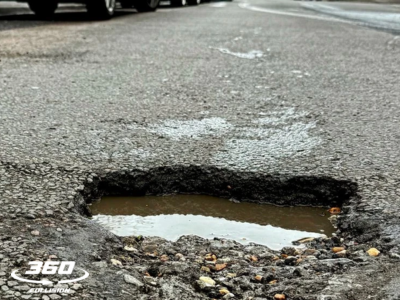
Sometimes it’s the “little” stuff — the parking-lot nudge, the curb check, the runaway shopping cart, the pothole you didn’t see because the sun set at 5:30 PM.
I meet so many drivers who say,
“It was just a tap… nothing serious.”
But when we scan the vehicle, the safety systems tell a different story.
December is the month when those small impacts can snowball into big safety concerns. You’re driving more miles, usually on unfamiliar routes, and your family is often in the back seat. If your sensors or cameras are even slightly misaligned, your vehicle may not warn you at the right moment – and that can make a dangerous holiday drive even riskier.
So before you brush off that minor bump, let me walk you through why an ADAS scan isn’t overkill – it’s smart, safe, and absolutely worth it this time of year.
It surprises people when I tell them this, but most modern collision repairs today aren’t about bent metal – they’re about technology. If your vehicle was built after 2018, chances are it’s relying on a web of cameras, sensors, radar units, and calibration points to help you stay safe. And when one small thing shifts, everything starts working a little differently.
Even a gentle tap on the bumper can knock a radar out of alignment.
A curb strike can change the reading of a steering-angle sensor.
A parking-lot nudge can cause a windshield camera to misjudge distances.
None of this is dramatic. Your car doesn’t make a loud noise or flash a big warning sign. Most drivers don’t feel anything at all – until the system reacts at the wrong moment… or doesn’t react when it should.
And that’s where December complicates things.
Holiday driving puts every ADAS feature to work.
Lane assist, forward collision warning, adaptive cruise, blind-spot monitoring… these aren’t “luxury” add-ons anymore. They’re real safety partners when you are driving in low light, tired after a long day, or navigating crowded San Antonio roads. When those systems aren’t reading the world correctly because of a small impact, the risk increases quickly.
Think of ADAS like your own sense of balance.
You would notice if your equilibrium felt “off,” but your car can’t tell you that — not until it reaches a fail point that triggers a warning light. By then, the misalignment has already changed the way the vehicle responds.
This is why minor collisions matter more than ever.
A bump may look small from the outside, but inside the vehicle, one miscalibrated module can throw off the whole safety chain. And during December travel, with kids in the backseat and darkness settling in early, that is simply not something you want to gamble with.
Your car depends on precise measurements.
Your family depends on you.
And I want to make sure both are protected before you put another mile on the road.
December driving has its own rhythm in San Antonio. It sneaks up on you every year. One minute you’re packing away pumpkins, and the next you’re rushing between Christmas programs, last-minute errands, and family gatherings. And while the holidays can be beautiful, they also create the perfect storm for small collisions.
⭐ Early sunsets change everything
By 5:30 PM, it’s already dark. Parking lots become harder to navigate, headlights glare off wet pavement, and visibility drops fast – even for confident drivers. This is when blind-spot sensors, rear cross-traffic alerts, and lane assist pull more weight than usual.
If those systems are even slightly misaligned from a bump earlier in the week, they may not “see” what they need to.
⭐ Fog and drizzle from the Hill Country roll in unexpectedly
Anyone who’s lived here long enough knows that early December mornings can be unpredictable. Fog moves through 281, I-10, and Loop 1604 like a slow curtain, and that’s when your forward-facing radar is doing most of the work. A tiny shift in that radar from a curb hit, fender tap, or even a loose bracket can disrupt how the system interprets distance.
⭐ Parking lots become chaos zones
HEB, La Cantera, Target, North Star Mall… choose your adventure. December shopping means tight spaces, hurried drivers, runaway carts, and quick taps that happen more often than people admit.
Those “small” impacts are the ones we see causing the most ADAS issues.
⭐ Holiday fatigue affects every driver
More errands, more events, more driving at off-hours… it adds up. When you’re tired, you lean on your safety systems more. That’s human. There is no shame in that. But this is also why you want those systems to be functioning at their very best.
⭐ Long-distance travel magnifies small problems
Heading to see family? Driving through the Hill Country? Taking the kids to the Zoo Lights or the River Walk holiday events? A misaligned sensor that’s barely noticeable on city streets becomes much more dangerous at highway speeds.
This is the month when ADAS matters most.
And it’s also the month when small impacts happen constantly – often without visible damage.
That is why a quick scan can give you so much peace of mind. It’s not just about checking boxes or doing “extra.” It’s about making sure your vehicle is truly ready for the miles ahead and that the systems designed to protect you are actually able to do their job.
One of the biggest myths I hear in the shop is this:
“Well, no warning lights came on…so I figured everything was fine.”
I wish it worked that way.
But most ADAS systems don’t throw a warning until something is significantly wrong. Minor misalignments, the kind caused by a parking-lot bump or curb strike, fly under the radar. They don’t show on the dash, but they show in how the car feels.
Here are the signs I tell friends, customers, and even my own teenagers to watch for:
- Your car suddenly pulls a little left or right
Even if it’s subtle, this can mean the steering-angle sensor isn’t reading the road accurately following a minor impact. People assume it’s just “alignment,” but alignment and ADAS are now tied together, especially on newer vehicles.
- Your steering wheel feels slightly off-center
If the wheel returns to center differently than before or sits a little crooked, that’s often a sign that the calibration between the wheel, camera, and sensors was disrupted.
- Your blind-spot warnings feel delayed or inconsistent
Blind-spot sensors live in areas that take damage easily — rear quarter panels, bumpers, and even mirror housings. A nudge in a parking lot can shift how they “see.”
- Your lane-keeping or lane-departure features feel jumpy
If the system tugs at the wheel too aggressively or not at all, the windshield camera may be slightly misaligned. That camera is extremely precise, and it doesn’t take much to throw off how it tracks lane markings.
- Your forward collision alerts feel too sensitive – or not sensitive enough
That forward radar can get knocked out of position without any visible damage. After a curb hit or low-speed tap, drivers often tell me the car starts giving early warnings or none at all.
- ADAS features turn off randomly or only work “sometimes”
This one is a big red flag.
Intermittent behavior almost always means the system is struggling to interpret distance or camera angles accurately.
The main thing I want drivers to understand is this:
Your vehicle will not always tell you when something is wrong – but it will show you.
And when you know what to look for, these small changes start to make sense.
A quick ADAS scan is often all it takes to confirm whether something shifted. Most of the time, people feel relieved just knowing exactly what’s going on with their car instead of guessing.
Most people don’t think twice about calibration until something goes very wrong. But the truth is that December is the worst time to ignore those tiny warning signs in your vehicle. Holiday driving puts every safety feature to the test, and if even one sensor is off, the whole system becomes unreliable.
Think about how you drive this time of year.
Maybe you’re taking longer trips to see family, weaving through crowded shopping centers, or navigating unfamiliar backroads at dusk. Your attention is already stretched thin. That is when your ADAS systems quietly step in maintaining lane position, watching your blind spots, measuring the distance to the car ahead, all without you noticing.
But if your forward camera or radar took a hit earlier in the month, even something as small as a parking-lot bump, those systems can misjudge what they see. A car may appear farther away than it really is. A lane line might register incorrectly. A blind-spot alert may hesitate for a second too long. None of these issues are dramatic on their own, but they become dangerous very quickly once you’re driving at highway speeds or in reduced visibility.
And December weather doesn’t do us any favors. The fog we get rolling in from the Hill Country, the drizzle, the glare from headlights reflecting off wet pavement… it all strains your safety systems. A camera that was barely hanging on in daylight might struggle completely once the visibility drops.
On top of that, people are tired this month. Truly tired. You’re running late to events, carrying heavy schedules, and squeezing in last-minute errands. When you’re fatigued, your own reaction time naturally slows down. That means you’re depending even more on the safety features in your vehicle to help fill in the gaps. If those systems aren’t reading the road correctly because of a misalignment, you’re essentially driving with a false sense of security and that’s a risk no one wants during the holidays.
I hear the same story every year:
“My car only did it once, so I ignored it.”
“I thought the steering just felt off because of the cold weather.”
“I didn’t realize a small bump could affect anything.”
These aren’t unusual. These are real comments from good drivers who simply didn’t understand how sensitive modern systems are. When we run the scan, the truth becomes obvious that the car has been trying to compensate for misreadings since that small impact earlier in the month.
Calibration isn’t a technical formality. It’s what makes the safety technology in your vehicle trustworthy. When you’re driving long distances with your family in the backseat, that trust is everything.
What Happens During an ADAS Scan and Calibration at Our Shop
Most people are surprised at how detailed an ADAS scan actually is. It is not a quick code check or a simple plug in and wait. It is a full evaluation of how your vehicle sees the world. When you bring your car to us, we treat every scan as a safety inspection, not a routine chore.
First, we connect your vehicle to an OEM approved diagnostic tool. This allows us to look inside each system and read the exact information the sensors have been collecting. If anything is out of alignment or behaving strangely, the scan will show it. Sometimes we uncover minor issues that have not yet surfaced while driving. Other times the vehicle is already flagging deeper concerns that the driver did not notice.
Once we know what the car is trying to tell us, we move into the calibration process. Some vehicles require a static calibration, which is performed in a controlled environment inside our calibration bay. Others require a dynamic calibration, which involves driving the vehicle at specific speeds under specific conditions so the system can relearn its surroundings. Both types require accuracy down to the smallest measurement. This is why calibration must be done by trained professionals who understand how these systems interact with the structure of your vehicle.
When calibration is complete, we verify every function again. We check the alignment, the steering angle, the camera views, and the radar readings. We always test drive the vehicle so we can confirm how the system behaves in real time. Your safety depends on precision and we take that seriously.
Before you leave, we document all findings and provide the information your insurance company may request. You will know exactly what needed adjustment and why it mattered. Most drivers feel relieved once they see what their vehicle had been trying to manage on its own.
This process does not take long, but it does require real expertise. Our team is trained, equipped, and prepared for both newer vehicles and older models with mixed systems. That is the advantage of coming to a shop that invests heavily in technology, training, and accuracy. Your vehicle is repaired correctly and your family travels with confidence.
Why Choose Our Shop for ADAS and Collision Repairs in San Antonio
Not every collision shop is prepared for the technology that comes standard on today’s vehicles. Many still rely on older equipment or send critical calibration work to outside vendors. That often slows repairs and increases the chance that something important will be missed.
Our shop works differently. We have invested in the same levels of training and equipment that manufacturers use. This includes advanced OEM approved scanners, a dedicated calibration bay, and technicians who continually train as new models and technologies enter the market. When a vehicle arrives at our shop, we handle the repair from start to finish in one place. Nothing is outsourced. Nothing is guessed. Nothing is rushed.
This matters more today than ever before. Every year the systems inside newer vehicles become more interconnected. A modern front bumper is no longer a simple piece of plastic. It often houses radar units, impact sensors, adaptive cruise control components, and wiring that must meet strict manufacturer specifications. A misalignment of even a few millimeters can alter how the system reads the road. That is why you want a team that understands the science behind your vehicle, not just the mechanics.
At the same time, we have the experience to work confidently on older vehicles as well. San Antonio has a wide mix of cars on the road. Some families are keeping their vehicles longer. Others are driving newer models filled with technology. Our technicians know how to repair structural damage, correct suspension issues, and restore frame integrity on older vehicles while also managing the advanced electronics in new ones. This flexibility is the reason our shop consistently delivers accurate repairs on every type of collision.
We also take your convenience seriously. When you choose our shop, you are choosing a team that communicates clearly, guides you through the insurance process, and treats your repair as a priority. This is not just a business for us. As a family and community centered shop, we understand how important it is to feel safe in your vehicle. That is why we put the extra time into doing the job correctly the first time.
When you leave our shop, you are not just getting your vehicle back. You are getting peace of mind, knowing that it has been inspected, calibrated, and restored with care and expertise.
Schedule Your Pre Holiday Calibration and Safety Check
The weeks leading up to Christmas are some of the busiest for San Antonio families. There are school events, gift errands, airport runs, and long drives to visit loved ones. With so many miles being added in such a short amount of time, this is the moment when your vehicle needs to be at its absolute best.
If you have been in even a minor accident recently, or if something about your car simply feels different, this is the safest time to let us take a look. A quick scan can confirm whether your sensors are aligned and responding correctly. If something is off, we can calibrate it on site and make sure every safety feature is working exactly as the manufacturer designed it to.
Many of our customers come in because they want peace of mind before heading out on the road. Some bring their vehicles in after a small bump in a parking lot. Others visit because the steering feels slightly unusual, or the blind spot alerts seem inconsistent. You never need to wait for a warning light. Your instincts are enough to schedule a check.
During December, our priority is helping families travel safely. We work efficiently without cutting corners and we keep you informed through every step of the process. When you leave our shop, you will know your vehicle is structurally sound, electronically calibrated, and ready for every mile ahead.
If you are planning a holiday trip or if you have noticed anything unusual since your last impact, give us a call. We will walk you through what to expect, help with insurance questions, and make sure you have everything you need for a safe and confident drive.
Your safety is the reason we do what we do.
Let us help you start the season with clarity, certainty, and a vehicle you can trust.
The holidays should feel joyful and steady, not stressful. You deserve to drive with confidence, and your family deserves to feel safe every time they buckle in. If your vehicle has been in a minor accident this month or if something simply feels different, do not ignore it. Modern safety systems rely on perfect calibration and even a small impact can change how your car interprets the road.
A quick visit to our shop can give you clear answers and real peace of mind. We can check your alignment, scan your ADAS systems, verify your sensors, and make sure everything is responding the way it should. You will know exactly what is happening inside your vehicle and you will leave with the assurance that your upcoming holiday travel is safe.
If you need help now, or if you want your vehicle inspected before heading out to see loved ones, call us at the number below. Our team is ready to guide you, support you, and protect the people you care about most.
Schedule your ADAS scan and safety check today.
Call 210 890 5906
We will take care of your vehicle so you can take care of what matters to you.