
Every December, I hear the same question, and this year it’s louder than ever.
“Why is my repair taking so long?”
It’s a fair question. When your car is in the shop, your routine is disrupted. You are juggling work, family schedules, holiday plans, and suddenly you are down a vehicle. As a mom and someone who has worked in collision repair for more than a decade, I understand how frustrating that can feel.
The honest answer is that collision repair in 2025 looks very different than it did even a few years ago. Vehicles are more advanced. Repairs are more technical. And across the country, there simply are not enough trained collision technicians to keep up with the demand. This shortage is affecting shops everywhere, not just here in San Antonio.
What makes December especially challenging is that it is already one of the busiest collision months of the year. Holiday travel, packed parking lots, and unpredictable weather lead to more accidents at the same time that repair complexity is at its highest. When you combine that with an industry-wide skills gap, delays become more common and quality can suffer at shops that are not prepared.
I believe customers deserve honesty and transparency about what is happening behind the scenes. In this article, I want to explain why repairs are taking longer in 2025, what the technician shortage really means for your vehicle, and how choosing the right shop can make a real difference in both repair time and safety.
Because while some delays are out of our control, how your vehicle is repaired and who repairs it absolutely is.
The National Collision Technician Shortage Explained
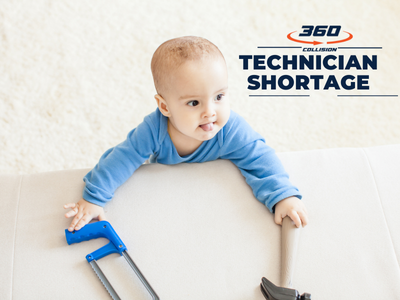
The technician shortage did not happen overnight, and it is not limited to one city or one type of shop. It is a nationwide issue that has been building quietly for years. Now in 2025, it is impossible to ignore.
Fewer young people are entering the collision repair field, even as vehicles become more complex and require more specialized training. At the same time, experienced technicians are retiring faster than they can be replaced. The result is a growing gap between how many repairs are needed and how many qualified people are available to do them correctly.
What makes this shortage more challenging is how much the job has changed. Collision repair today is not just body work and paint. It involves electronics, sensors, calibration, scanning, software updates, and manufacturer specific procedures. A technician now needs both mechanical skill and technical knowledge. That level of training takes time, commitment, and constant education.
Many shops are struggling to keep up. Some rely on a small number of technicians to handle a growing workload. Others are forced to turn away repairs they are not equipped to complete properly. In some cases, shops outsource critical steps like calibration or diagnostics because they do not have trained staff in house. That adds time and creates more room for miscommunication or missed details.
December puts even more pressure on an already stretched industry. Accident volume increases while families are traveling and schedules are tighter. Parts availability can slow down. Insurance claims stack up. When a shop does not have enough skilled technicians, these pressures quickly turn into long wait times for customers.
This is why the technician shortage matters to you as a driver. It affects how long your repair takes, how accurately your vehicle is restored, and how confident you can feel when you get back behind the wheel. Choosing a shop with the right people and training is no longer just a preference. It is a safety decision.
How the Skills Gap Slows Down Repairs and Affects Quality
When a shop does not have enough trained technicians, repairs slow down in ways customers rarely see. It is not always about how fast a car can be taken apart or painted. It is about how many times the vehicle has to stop and wait while someone figures out the next step.
Modern collision repairs require careful planning. A vehicle needs to be scanned, measured, inspected, and sometimes disassembled before the full scope of damage is even visible. If a shop lacks the training to recognize what they are looking at, that process takes longer and mistakes happen more easily. Missed damage leads to supplements. Supplements lead to insurance delays. Delays turn into longer repair times and more frustration for everyone involved.
The skills gap also affects how repairs are performed. Some shops rely on outside vendors for diagnostics or calibration because they do not have trained staff in house. Every time a vehicle has to leave the shop for a critical step, the clock keeps ticking. Scheduling conflicts happen. Communication gets stretched. A repair that could have moved smoothly starts to stall.
Quality can suffer when technicians are overwhelmed or undertrained. Modern vehicles do not allow for shortcuts. Sensors must be aligned correctly. Structural repairs must follow manufacturer specifications. Electrical systems must be verified before the car is returned to the road. When a shop is rushing to keep up or lacks the right expertise, those steps are at risk of being skipped or rushed.
December magnifies these issues. More accidents come in at the same time families need their vehicles back quickly. Shops without enough skilled technicians are forced to choose between speed and accuracy. That is not a choice any driver should have to worry about.
This is why understanding who is repairing your vehicle matters. The technician shortage is not just an industry headline. It directly affects how long your car stays in the shop and how safe it is when you get it back.
Why Our Shop Has Faster Turnaround Times Without Cutting Corners
Not all collision delays are unavoidable. While the technician shortage is real, how a shop prepares for it makes a meaningful difference. From the beginning, we made the decision to invest in people, training, and equipment instead of relying on shortcuts or outside vendors.
Our technicians are continuously trained to work on both modern vehicles and older models. That means fewer handoffs, fewer pauses in the repair process, and fewer surprises once repairs are underway. When a vehicle comes into our shop, we are able to diagnose the damage accurately from the start because we have the tools and the knowledge to do so.
We also handle critical repair steps in house. Scanning, calibration, diagnostics, and verification are all performed on site. This keeps repairs moving forward instead of waiting for outside scheduling or transport. It also allows us to catch issues early, before they turn into delays later in the process.
Accuracy plays a major role in repair time. When damage is identified correctly and repairs follow manufacturer procedures from the start, insurance supplements are reduced and approvals move faster. That means less back and forth and fewer days added to the repair timeline.
Most importantly, we do not rush the work. Faster does not mean careless. It means organized, prepared, and experienced. Our goal is to return your vehicle safely and correctly the first time, so you are not dealing with follow up issues later.
During December, when schedules are tight and travel plans matter, that approach becomes even more valuable. Our customers trust us not just to repair their vehicles, but to respect their time and their safety.
What This Means for You During Holiday Travel
When your vehicle is in the shop longer than expected, it affects more than just your schedule. It changes how you get to work, how your family moves through the week, and how confident you feel heading into a busy season. During December, those pressures are amplified.
Holiday travel means longer drives, heavier traffic, and less room for error. If a repair is delayed because a shop is waiting on outside services or struggling with staffing, you may feel tempted to rush the process or pick up the vehicle before everything is truly complete. That is when problems tend to show up later on the road.
A properly repaired vehicle should feel predictable and solid. Steering should be steady. Safety features should respond consistently. Warning lights should stay off. When repairs are done correctly the first time, you can focus on where you are going instead of worrying about what might fail along the way.
Choosing a shop that is prepared for modern repairs helps reduce stress during an already busy month. It means fewer delays, clearer communication, and confidence that the work was performed according to manufacturer standards. That confidence matters when you are driving at night, traveling with family, or navigating unfamiliar roads.
December travel is not just about getting from point A to point B. It is about showing up safely for the people and moments that matter most. Your vehicle plays a big role in that, and it deserves the right level of care.
If there is one thing I encourage drivers to do in December, it is this. Do not wait. Even if the damage looks minor, even if the car still drives, even if life feels too busy to deal with it right now.
The sooner your vehicle is inspected, the smoother everything else tends to go. Small issues are easier to diagnose early, before parts shift further or warning lights appear. Early scans give insurance companies clearer documentation, which speeds up approvals. And getting on a repair schedule sooner helps you avoid the end of month rush that always happens right before Christmas.
Another important step is choosing a shop that can handle the full repair in one place. When diagnostics or calibrations are sent elsewhere, repairs often stall while everyone waits for availability. In December, those delays add up quickly. A shop that performs scanning, calibration, and verification in house has more control over the timeline and fewer moving pieces that can slow things down.
Communication also matters. Ask questions. Make sure you understand what your vehicle needs and why. A shop that takes the time to explain the process is usually a shop that is paying attention to the details. That attention is what prevents surprises later.
Most of all, do not feel pressured to rush a repair just to get back on the road quickly. A properly repaired vehicle protects you long after the holidays are over. Taking a little extra care now can save you stress, inconvenience, and safety concerns down the road.
Schedule Your Repair Before Christmas Travel
December moves quickly, and once Christmas week arrives, time feels even tighter. If your vehicle has been involved in an accident recently or if you are still waiting to schedule an inspection, now is the best moment to take action.
Getting your repair started before holiday travel gives you options. It allows time for a proper inspection, accurate repairs, and complete verification before you are driving longer distances or carrying precious cargo. It also reduces the stress of trying to solve vehicle issues at the last minute when schedules are full and parts availability becomes more limited.
Our team is here to guide you through the process with clarity and care. We communicate honestly about timelines, work directly with insurance companies, and focus on restoring your vehicle safely and correctly. Whether the damage is minor or more involved, our priority is to make sure you can drive with confidence through the holidays and beyond.
If you have questions about a repair, concerns about delays, or simply want an expert opinion, give us a call. We are happy to take the time to explain what your vehicle needs and how we can help.
Your safety matters. Your time matters. And your vehicle deserves the level of attention that keeps it dependable for every mile ahead.
Call 210 890 5906 to schedule your repair or inspection today.