
Auto paint refinishing is not the same job as a quick touch up, and it is not the same job as detailing or a ceramic coating either.
Refinishing means a panel, or several panels, are taken back to bare metal or a stable base and rebuilt in layers: primer, base color, clear coat, and cure. If a shop used the word and you are not sure what you are paying for, this is what actually happens to your car. If you already know you need the work done, start with our auto paint repair service in San Antonio.
Key Takeaways
- Refinishing rebuilds the paint layers on a panel from a bare or near bare surface, which is a bigger scope than a touch up or a blend repair.
- The full sequence is assessment, strip and prep, primer, base coat with color match, clear coat, bake and cure, blend and buff, then reassembly and a quality check.
- OEM color matching starts from your vehicle factory paint code and is verified on a test panel before any paint goes on the car.
- Refinishing is the right call when clear coat is failing across the panel, rust has started under the paint, damage covers most of the panel, or you want a color change.
- San Antonio sun exposure is one of the most common non accident reasons a vehicle needs refinishing, since UV damage affects a whole panel rather than one spot.
Refinishing Versus Touch Up Versus Repair
These three terms get used loosely, and San Antonio drivers calling around for quotes often get different answers from different shops because of it.
A touch up fixes a small, shallow spot, a chip or a thin scratch, without stripping the panel. A paint repair blends a repaired section into the surrounding factory paint after bodywork like dent removal. Refinishing goes further: the panel is stripped down, and the color and clear coat are rebuilt from a bare or near bare surface rather than blended into what is already there.
Refinishing is what a shop does when the existing paint is too damaged, too faded, or too extensively affected to blend into, or when a customer wants a full panel or full vehicle repaint rather than a spot repair.
The Auto Paint Refinishing Process, Step by Step
1. Assessment and Scope
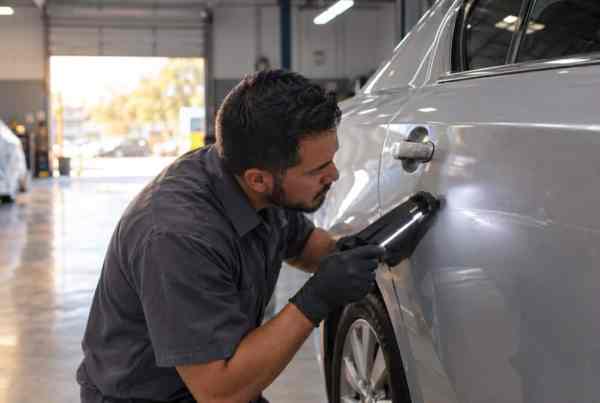
A technician inspects the panel to determine how far the refinish needs to extend. This includes checking for rust underneath any chipped areas, since paint over active rust fails quickly, and confirming whether adjacent panels need to be blended for the color transition to be invisible.
2. Strip and Prep
The panel surface is sanded down to a stable base, removing old clear coat, damaged base coat, and in more severe cases, all the way to bare metal. Any body filler work from a related dent repair happens at this stage too, since paint and bodywork are usually scoped together when both are needed. Trim, badges, and adjacent panels not being painted are masked off.
3. Primer
Primer is applied to the bare or sanded surface. This layer does two jobs: it gives the base coat something to properly adhere to, and it seals bare metal against corrosion, which matters in San Antonio given how quickly humidity after a rain event can start rust on exposed steel.
4. Base Coat and Color Match
This is where OEM color matching happens. Your vehicle factory paint code is pulled and matched using computerized formulation, then verified on a test panel before it goes on the car. Solid colors are matched in a single base coat layer. Metallic and pearl finishes need additional layers and more careful application to replicate the factory look, since these finishes shift in appearance depending on light angle in a way solid colors do not.
5. Clear Coat
Clear coat is applied over the base color to protect it and give the finish its final gloss level. This is also the layer that takes the brunt of San Antonio sun exposure over the life of the paint, which is part of why clear coat failure from UV damage is a common reason vehicles need refinishing here even with no accident involved.
6. Bake and Cure
The panel is cured, often in a heated booth, so the paint hardens fully rather than staying soft. A panel that looks dry after twenty minutes is not necessarily cured, and handling it too early can leave marks in the finish. This step is why a same day full panel refinish is rare, even though a small touch up often can be same day.
7. Blend and Buff
If the refinished panel sits next to original factory paint, the edge is blended so there is no visible line where new paint meets old. The final surface is buffed to match the gloss level of the rest of the vehicle.
8. Reassembly and Quality Check
Trim and badges go back on, and the panel is inspected under proper lighting for color match, texture, and gloss consistency before the vehicle is released.
When Refinishing Is the Right Call Versus a Blend Repair
Not every paint job needs a full refinish. A shop should recommend the least invasive option that gets a correct, durable result, not automatically the most expensive one.
Refinishing tends to be the right call when the existing clear coat is failing or peeling across the panel rather than only at the damage site, when rust has already started under the paint, when the damage covers most of the panel already, or when you are asking for a color change rather than a repair.
A blend repair, covered in more detail in our post on professional paint repair services, is usually the right call for a contained scratch, chip, or single impact area where the surrounding paint is still sound.
What Refinishing Costs Compared to a Repair
Refinishing generally costs more than a spot repair or blend because it involves more surface area, more material, and more labor across every step above rather than a shorter list of steps on a smaller area. For a full breakdown of pricing by repair type, including where refinishing sits on the range, see our guide on car paint repair cost in San Antonio.
San Antonio Conditions That Affect Refinishing
Heat during cure. Summer ambient temperatures in San Antonio can actually help paint cure faster in some conditions, but a controlled bake booth is still used for consistent results rather than relying on outside heat, since uneven curing leads to uneven gloss.
Sun exposure over time. Vehicles that sit outside daily in San Antonio sun accumulate UV damage to clear coat faster than a garage kept vehicle in a milder climate. This is one of the more common non accident reasons a vehicle needs refinishing rather than a simple repair, since UV damage tends to affect a whole panel rather than a single spot.
Vehicle make and factory finish. We regularly refinish everything from daily commuter sedans to trucks with factory two tone or metallic finishes. A Toyota factory silver or a Ford factory white are both solid colors and among the more straightforward matches; three stage and custom factory colors take more time to match correctly regardless of make. White is also the most common color we see, and that tracks with the data: the Axalta 2025 Global Automotive Color Popularity Report found white leads North America at 31 percent. That does not make every white an easy match, because pearl whites are three stage finishes, which is exactly why we verify on a test panel first.
Getting Started
360 Collision provides free written estimates for refinishing work at our San Antonio shop, 8803 Oakland Rd, in person or from photos submitted through our contact page. We are I CAR Gold Class certified and every refinishing job carries our lifetime warranty.
Frequently Asked Questions
Refinishing is a full rebuild of the paint layers on a panel: strip and prep, primer, base coat color match, clear coat, cure, blend, and a final quality check. It is more involved than a touch up or a spot repair blend.
A color match repair blends a repaired area into existing surrounding paint. Refinishing strips the panel down and rebuilds the paint from a bare or near bare surface, which is typically needed when the surrounding paint cannot be blended into cleanly.
The full sequence is assessment and scope, strip and prep, primer, base coat with color match, clear coat, bake and cure, blend and buff, then reassembly and a quality check before the vehicle is released.
Primer does two jobs: it gives the base coat something to properly adhere to, and it seals bare metal against corrosion. That matters in San Antonio, where humidity after a rain event can quickly start rust on exposed steel.
Yes. The process starts with your vehicle factory paint code and computerized color formulation, verified on a test panel before it is applied to your car, whether the finish is a solid color or a metallic or pearl.
The cure step happens in a controlled bake booth rather than relying on outside temperature, so weather does not change the cure time, though it can factor into scheduling around a shop booth availability.
Solid colors are matched in a single base coat layer. Metallic and pearl finishes need additional layers and more careful application, since they shift in appearance with the light angle. Three stage and custom factory colors take more time to match correctly regardless of make.
Rarely. The panel is cured, often in a heated booth, so the paint hardens fully. A panel that looks dry after twenty minutes is not necessarily cured, and handling it too early can leave marks in the finish. A small touch up often can be same day.
It depends on how much of the panel is affected and the condition of the surrounding clear coat. A free written estimate at 360 Collision will tell you which scope is actually needed rather than defaulting to the more expensive option.
Refinishing tends to be the right call when the clear coat is failing or peeling across the panel, when rust has started under the paint, when the damage covers most of the panel, or when you want a color change. A contained scratch, chip, or single impact area on sound paint usually calls for a blend repair.
Yes. Vehicles that sit outside daily in San Antonio sun build up UV damage to the clear coat faster, and it is one of the most common non accident reasons for refinishing, since UV damage tends to affect a whole panel rather than a single spot.
Generally yes. Refinishing involves more surface area, more material, and more labor across every step than a spot repair or blend on a smaller area. 360 Collision provides free written estimates in person or from photos, and every refinishing job carries our lifetime warranty.
Ask Us Which Scope Your Paint Actually Needs
A free written estimate tells you whether your panel needs a full refinish or a smaller blend repair, before you commit to either one.
Schedule Free EstimateOr call us: (210) 405-8817