
Key Takeaways
- A diminished value claim lets a San Antonio driver recover the value a vehicle loses simply from having been in an accident, even after a quality repair.
- Texas allows drivers to pursue diminished value from an at-fault driver’s insurance company, separate from the cost of the repair itself.
- Detailed repair records, before and after photos, and an independent post-repair appraisal are the foundation of a strong claim.
- Filing too late, skipping the written estimate, or relying only on the insurer’s own number are the most common reasons a claim comes back weak.
- 360 Collision documents every repair in detail, which gives San Antonio drivers the paperwork a diminished value claim depends on.
What Is a Diminished Value Claim?
A diminished value claim is a request for compensation that covers the drop in a vehicle’s resale or trade-in value after it has been in a collision, even once the repair work is complete and the car looks and drives like new. Two vehicles with identical mileage and condition rarely sell for the same price if one carries an accident on its title or vehicle history report. That gap in value is what a diminished value claim is designed to recover, and it is a separate number from whatever the collision repair itself cost.
For San Antonio drivers, understanding diminished value matters most right after a collision repair, while the paperwork, photos, and estimates that support a claim are still easy to gather. Waiting months to look into it usually means losing access to the records that make a claim easy to prove.
Inherent Diminished Value Versus Repair Related Diminished Value
Most diminished value claims fall into one of two categories. Inherent diminished value is the value a vehicle loses just from having an accident on its history, regardless of repair quality, because buyers and appraisers treat a repaired vehicle differently than one with a clean history. Repair related diminished value is the additional value lost when the repair itself falls short of pre-accident condition, such as visible panel gaps, mismatched paint, or the use of parts that do not match the vehicle’s original specification.
A well documented, high quality repair minimizes repair related diminished value, but it does not eliminate inherent diminished value. That is why even a perfectly repaired vehicle can still support a legitimate claim.
Who Can File a Diminished Value Claim
In Texas, a driver who was not at fault for the collision can generally pursue a diminished value claim against the at-fault driver’s insurance company. This is different from a claim against your own insurer under your own policy, which may not include diminished value coverage at all unless you specifically carry it. Confirming fault, and confirming which insurance company is actually responsible for the claim, is the first practical step before gathering any paperwork.
How Diminished Value Works After a Collision Repair
Once a vehicle has been repaired, its market value is compared against what a similar, accident free vehicle of the same year, make, model, mileage, and trim would sell for. The difference between those two numbers, adjusted for the specifics of the repair, is the basis for the diminished value figure a claim is built around.
Why a Repaired Vehicle Loses Value
Buyers, dealers, and appraisers rely on vehicle history reports that flag prior accidents. A flagged vehicle is typically priced lower in a private sale, and many dealers offer a reduced trade-in value once an accident shows up on the report, independent of how the repair actually looks or drives. That pricing gap exists whether the driver plans to sell the vehicle soon or not, which is why a diminished value claim is worth pursuing even for a car the owner intends to keep for years.
What Affects How Much Value Is Lost
Several factors influence how much diminished value applies to a specific vehicle and a specific repair. None of these factors are fixed numbers; they are the inputs an appraiser weighs when producing a diminished value figure for one particular vehicle.
Vehicle Age and Mileage
Newer vehicles with lower mileage generally carry a larger diminished value gap in dollar terms, since buyers of newer cars are more sensitive to accident history. Older, higher mileage vehicles still qualify, but the dollar amount tends to be smaller relative to the vehicle’s overall value.
Severity and Location of the Damage
Structural or frame damage, and damage that required replacing rather than repairing major panels, typically has a larger effect on value than cosmetic bumper or dent damage. Damage to a highly visible area, such as a front fender or hood, can also weigh differently than damage tucked along a rear quarter panel.
Repair Quality and Parts Used
A repair performed to the manufacturer’s specifications, with proper panel alignment, color matched paint, and OEM level parts where appropriate, protects against additional repair related diminished value on top of the inherent value already lost from the accident itself.
Steps to File a Diminished Value Claim in San Antonio
Filing a diminished value claim is a documentation heavy process. The stronger the paper trail behind the claim, the easier it is for an insurance adjuster, or eventually a court, to evaluate it fairly.
Document Everything Before and After Repair
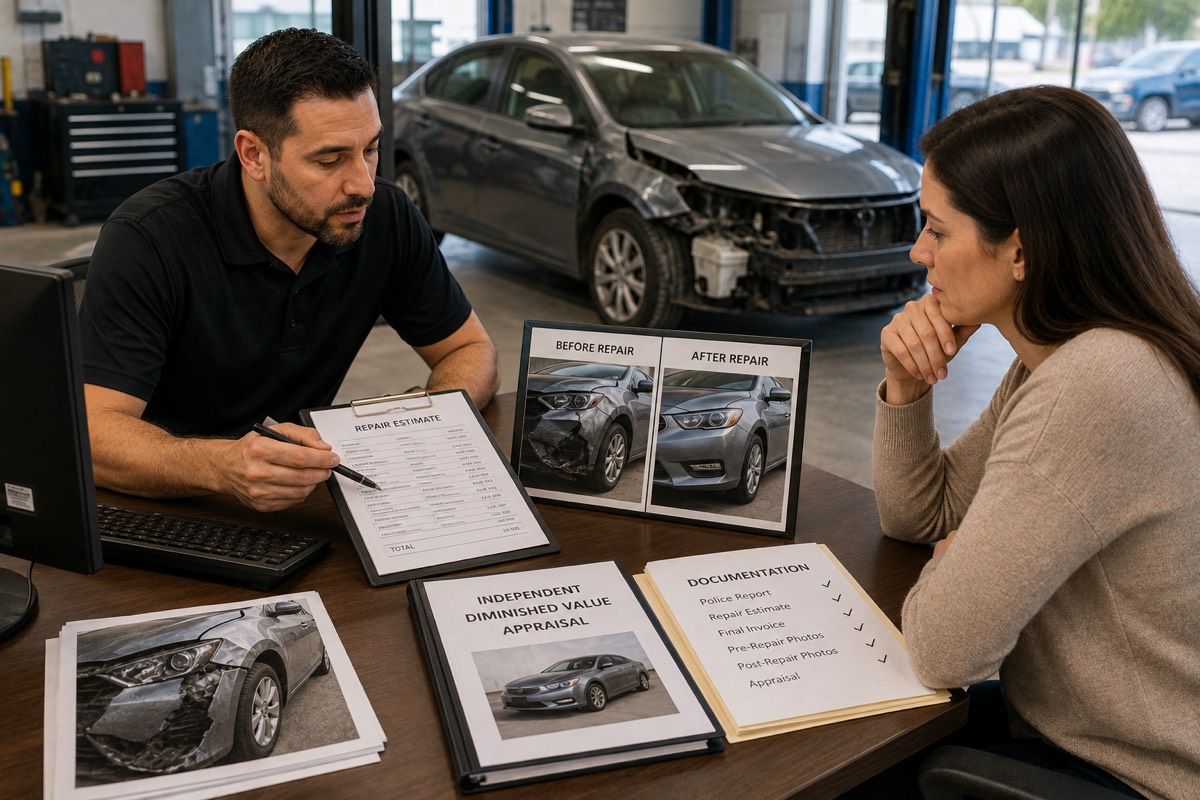
Keep the police report, the original repair estimate, the final itemized repair invoice, and photos of the damage before any work began. Photos of the completed repair are useful too, since they show the quality of the work an appraiser will factor into the claim.
Get an Independent Appraisal
An independent diminished value appraisal, separate from any number the insurance company offers on its own, gives a driver a documented figure to negotiate from rather than accepting the insurer’s first offer without a comparison point. This step is often what separates a claim that gets a fair result from one that does not.
Submit the Claim to the At-Fault Driver’s Insurer
Once the documentation and appraisal are in hand, the claim is submitted to the at-fault driver’s insurance company, along with a written request for the diminished value amount and the supporting paperwork. Insurers are not required to volunteer this figure on their own, so the request typically has to come from the driver.
Common Mistakes That Weaken a Diminished Value Claim
Several avoidable mistakes come up again and again in diminished value claims, and each one makes the claim harder to support.
Waiting Too Long to File
Texas law limits how long a driver has to bring a property damage claim, and evidence gets harder to gather the longer a driver waits. Starting the documentation process at the time of repair, rather than months later, protects the claim.
Skipping the Written Repair Estimate
A verbal estimate is not something an insurance adjuster can evaluate. A written, itemized estimate from the shop that performed the repair is one of the core documents a diminished value claim is built around.
Not Getting a Post-Repair Appraisal
Relying only on pre-repair damage photos, without an appraisal that reflects the vehicle’s actual post-repair condition, leaves out the step that ties the claim directly to real market value. A post-repair appraisal is what turns a general argument into a specific dollar figure.
How 360 Collision Supports Your Diminished Value Claim
San Antonio drivers working through a diminished value claim need paperwork they can hand to an insurance adjuster or an appraiser without gaps. That documentation starts with the shop that performs the repair.
Detailed Repair Documentation
Every repair at 360 Collision comes with a written, itemized estimate and a final invoice that lists the parts and labor used, the kind of record a diminished value claim depends on. Our full range of collision and body repair services are documented the same way, whether the job is a bumper repair or a full frame straightening.
Working With San Antonio Drivers Through the Claims Process
Whether a driver is still deciding whether to pay out of pocket or file an insurance claim, or is already working through how the collision repair insurance claims process works, having a shop that documents the repair thoroughly makes every later step, including a diminished value claim, easier to support. For a full breakdown of what a repair typically costs before diminished value ever enters the picture, see our San Antonio collision repair cost guide.
Frequently Asked Questions
A diminished value claim is a request to recover the drop in a vehicle’s resale or trade-in value after a collision, even once the vehicle has been fully repaired. It is separate from the cost of the repair itself.
No. Repair cost covers the labor and parts to fix the vehicle. Diminished value covers the separate loss in the vehicle’s market value simply because it now has an accident on its history, regardless of repair quality.
Inherent diminished value is the value lost just from having an accident on record, no matter how good the repair is. Repair related diminished value is the additional value lost if the repair itself falls short of pre-accident condition, such as mismatched paint or misaligned panels.
Yes. Inherent diminished value still applies because a vehicle history report will show the accident regardless of repair quality, and that alone affects resale and trade-in pricing.
Yes. Texas allows drivers who were not at fault to pursue a diminished value claim against the at-fault driver’s insurance company. A claim against your own insurer depends on whether your own policy includes diminished value coverage.
A police report, the original written repair estimate, the final itemized repair invoice, before and after photos of the damage and repair, and an independent post-repair appraisal are the core documents that support a claim.
Texas limits how long a driver has to bring a property damage claim, and the evidence needed to support a diminished value claim gets harder to gather the longer a driver waits. Starting the documentation process at the time of repair is the safest approach.
A diminished value claim is typically filed against the at-fault driver’s insurance company, since Texas allows this type of claim when another driver caused the accident.
Yes. Newer, lower mileage vehicles generally carry a larger diminished value gap in dollar terms, since buyers of newer vehicles are more sensitive to accident history. Older, higher mileage vehicles still qualify, but the dollar amount tends to be smaller.
Typically yes. Structural or frame damage, and repairs that required replacing rather than repairing major panels, tend to have a larger effect on value than cosmetic bumper or dent damage.
A shop that provides a detailed written estimate and itemized final invoice, and repairs the vehicle to proper panel alignment and color match, gives you the documentation and repair quality that protects a diminished value claim from additional, repair related value loss.
An independent appraisal gives you a documented figure to compare against the insurer’s own number instead of accepting the first offer without a comparison point, which is often what separates a fair result from an underpaid one.
Get a Repair Record That Supports Your Claim
If your vehicle was in a collision, 360 Collision documents every step of the repair with the written estimates and itemized invoices a diminished value claim depends on. Schedule a free estimate with our San Antonio team today.
Schedule Free EstimateOr call us: (210) 405-8817