
Most drivers pick up a repaired car, glance at the panel that was hit, and drive away. The signs of bad collision repair usually show up later, in daylight, at highway speed, or the first time it rains.
This guide is for the driver who already had work done and has a feeling something is off. It covers what to check in the parking lot before you leave, what tends to show up in the first weeks, which problems are cosmetic and which are safety issues, and what you can do if the repair was not right. For context on what is at stake, the Insurance Information Institute reports the average collision claim in 2024 was 5,489 dollars, a lot of money to spend on a repair you are not sure about.
Key Takeaways
- Check the car in daylight before you leave the shop, side by side with the repair invoice.
- Paint that does not match, uneven gaps, and overspray are the easiest signs of bad collision repair to spot.
- Warning lights, pulling, or new noises point to structural, alignment, or sensor issues and are safety concerns.
- Ask for the itemized final invoice and confirm each line matches work you can see.
- Raise problems with the original shop first, in writing, and use the warranty.
What to Check Before You Leave the Shop
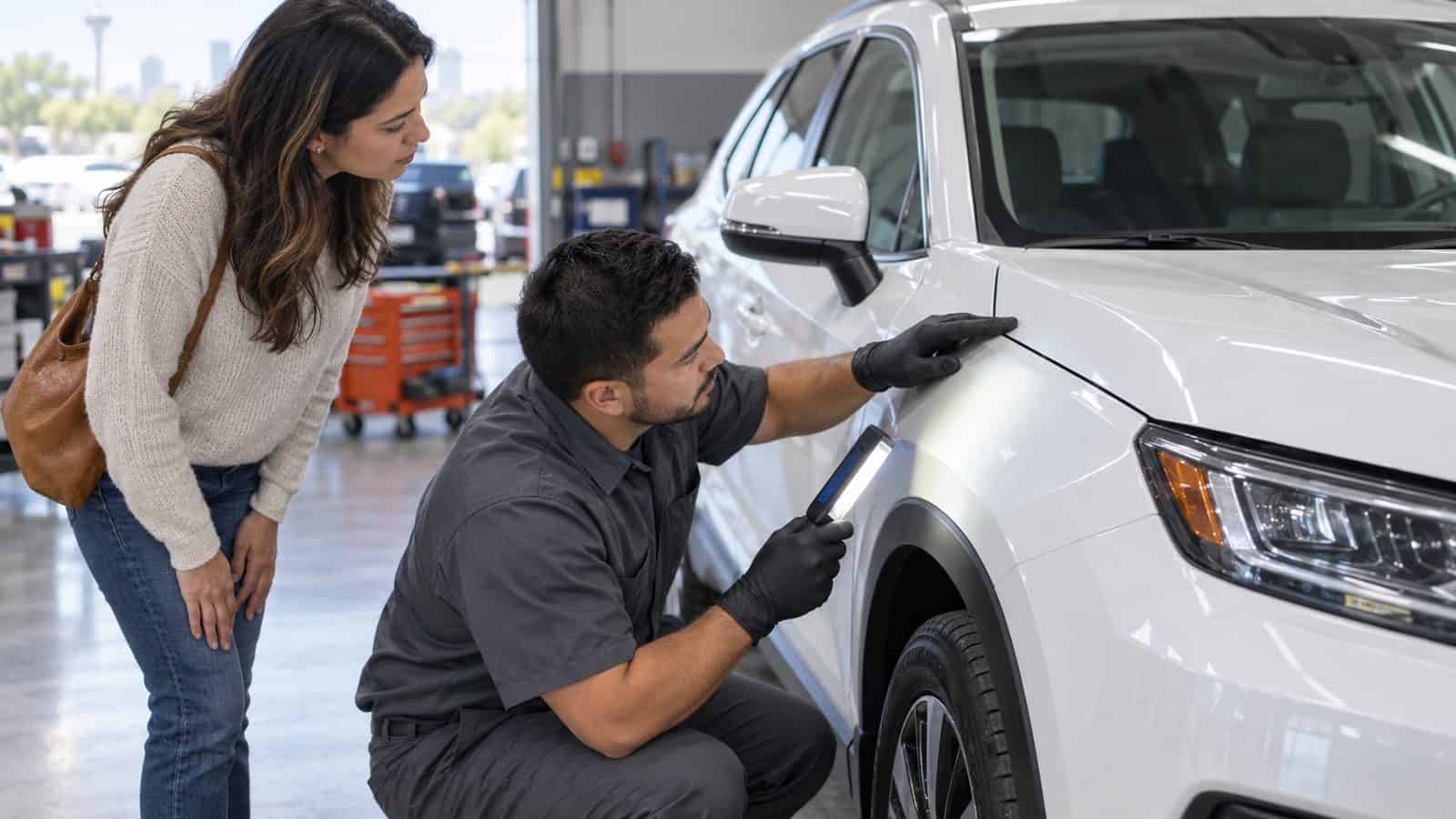
A good shop expects you to look the car over and will walk it with you. Ask for that walk-around, and do it outside, not under shop lighting.
Look at the repaired area from three angles
Stand at the front corner, the side, and the rear corner. Panels that were refinished should reflect the same way as the panels next to them. A difference in shade or gloss is easier to see at an angle than straight on.
A quick parking lot checklist
- Paint color and gloss match the neighboring panels
- Gaps between doors, hood, trunk, and fenders are even on both sides
- No paint mist on rubber seals, glass, trim, or tires
- Doors, hood, and trunk open and close without force or rubbing
- Lights, signals, and sensors work, and no warning lights stay on at startup
Read the invoice against the car
The final bill should be itemized. Every line should match either the original estimate or an approved supplement, and you should be able to see the work it describes. Our guide to the collision repair supplement process explains how those documents fit together.
Cosmetic Signs of Bad Collision Repair
Paint that does not match
Factory paint changes with age and sun, which is why a good shop tints and blends color into adjacent panels rather than painting one panel in isolation. A refinished door that looks a shade lighter or darker in sunlight is the most common complaint. Our article on color matching in auto body painting explains why blending matters.
Texture, runs, and dust
Look along the panel at a low angle. A finish that looks bumpy like an orange peel when the rest of the car is smooth, drips near edges, or small specks trapped in the clear coat point to a rushed refinish.
Overspray
Paint mist on window rubber, plastic trim, or the edges of glass means the area was not masked properly. It is cosmetic, but it says something about how carefully the rest of the job was done.
Fit and Function Signs You Should Not Ignore
Uneven panel gaps
The gap between the hood and fender, or between two doors, should be consistent from top to bottom and match the other side of the car. A gap that is wide at one end and tight at the other can mean a panel was hung out of position, or that the structure behind it was not fully straightened.
Doors and trunks that fight you
A door that needs a slam to latch, a trunk that will not close evenly, or wind noise that was not there before often trace back to alignment of panels or the body underneath.
Water leaks
A damp carpet or fog inside a headlight after the first rain points to a seal that was not reinstalled correctly.
Safety Signs: Warning Lights, Pulling, and Noises
These are the signs that matter most, because they can affect how the car behaves in the next crash.
Warning lights after the repair
Modern bumpers, mirrors, and windshields carry cameras and radar sensors. If a lane keeping, parking, or collision warning light comes on after the repair, a sensor may not have been recalibrated. Our guide on ADAS scans after a minor accident explains when calibration is needed.
The car pulls or the steering wheel is off center
Pulling to one side, uneven tire wear, or a crooked steering wheel can come from alignment, suspension, or structural damage that was not fully corrected. Our article on the signs of frame damage after an accident lists what to watch for.
New rattles, clunks, or rubbing
A noise over bumps that was not there before the crash deserves a second look, especially near the area that was repaired.
What to Do If Your Car Was Not Repaired Correctly
Go back to the original shop first, in writing
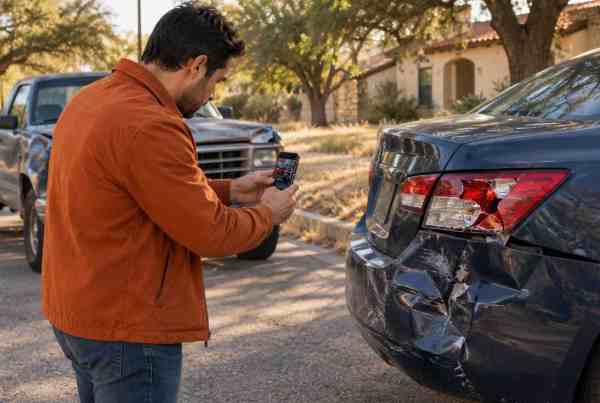
Take dated photos, list each problem, and give the shop a chance to fix it. Most reputable shops back their work with a written warranty, and a comeback is part of the job. Keep copies of every message.
Get a second inspection
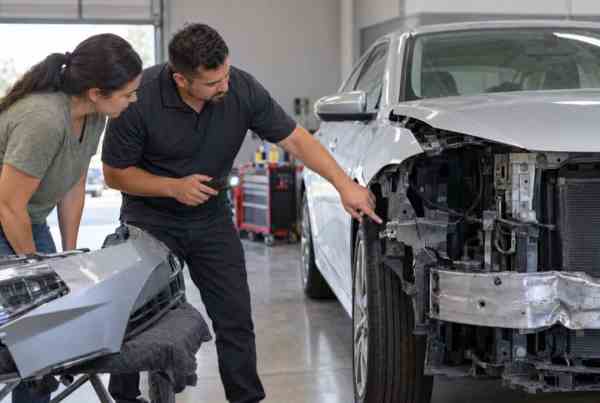
If the shop will not address it, a different shop can inspect the car and write up what it finds. A written, itemized inspection with photos gives you something concrete to bring to the shop or your insurer.
Talk to your insurer
If the repair was paid by insurance, tell your adjuster. The Texas Department of Insurance auto insurance guide explains that for disputes about the amount of your claim with your own insurer you can ask for appraisal, and that you can file a written complaint with TDI if a problem is not resolved.
How 360 Collision Handles Second Opinions and Re-Repairs
We see cars that were repaired somewhere else and still do not feel right. Our process:
- A free written, itemized inspection with photos of each issue
- Paint measured and blended to the panels around it, not matched by eye
- Structural measurement through our frame repair service when gaps or pulling point to the body
- ADAS checks and calibration when warning lights are involved
- I-CAR Gold Class training, ASE technicians, and a lifetime warranty on our repairs
360 Collision is at 8803 Oakland Rd in San Antonio. Request a free written estimate through our contact page.
Frequently Asked Questions
Paint that does not match in daylight, uneven gaps between panels, overspray on trim or glass, doors that do not close smoothly, and warning lights that stay on after the repair.
Look at the repaired panel next to its neighbors outside in sunlight and from an angle. Color and gloss should look the same. A visible line or shade change usually means the color was not blended.
It is a sign the area was not masked carefully. Overspray on rubber seals, trim, or glass is cosmetic, but it often goes with other shortcuts in the same job.
A panel may have been installed out of position, or the structure behind it may not have been fully straightened. Uneven gaps deserve a professional inspection.
No. A warning light that stays on after the repair often means a camera or radar sensor was not recalibrated, or a connection was not restored. Have it checked before relying on the system.
Pulling can come from alignment, suspension, or structural damage that was not fully corrected. Because it affects handling, it should be inspected promptly.
It can. Structure that was not restored to specification, or sensors that were not calibrated, can change how the car protects you or how its safety systems respond.
Yes. Walk around it outside with the technician, open and close every door, start it to check for warning lights, and compare the itemized invoice to the work you can see.
Document each problem with dated photos and contact the original shop in writing first. Most reputable shops back their work with a written warranty and will correct it.
Yes. A second shop can inspect the vehicle and write an itemized report with photos, which gives you specific evidence to take back to the original shop or your insurer.
Tell your adjuster. The Texas Department of Insurance explains that you can ask for appraisal in a dispute with your own insurer about the claim amount, and you can file a written complaint with TDI.
Yes. We start with a free written, itemized inspection, then correct paint, panel fit, structure, or sensor calibration as needed, backed by our lifetime warranty.
Not Sure Your Car Was Repaired Right?
Bring it to 8803 Oakland Rd for a free written inspection. We photograph every issue and explain what it would take to make it right.
Schedule Free EstimateOr call us: (210) 405-8817