


The written estimate is the number you get on the first visit. The final repair bill is the number your insurer actually pays. In between sits the collision repair supplement process, and it is the part of a collision repair that almost nobody explains before it happens.
Most San Antonio drivers meet the word supplement when a shop calls to say the scope of the repair has changed. Nothing has gone wrong when that call comes. A supplement is how a body shop reports damage that could not be seen until the vehicle was taken apart. This guide walks the stretch between your estimate appointment and the final bill: what the shop writes down, why the number moves, who approves the change, and what slows an approval.
Key Takeaways
- The first estimate is written from visible damage, so it is an opening scope, not a final bill.
- A supplement is an updated estimate the shop sends after teardown reveals damage that could not be seen from the outside.
- The insurance company approves a supplement, not the shop, and that approval usually comes line by line.
- Most holdups trace back to thin documentation, parts sourcing, or a reinspection that has to be scheduled.
- The part you control is the estimate appointment, where complete information removes the most common holdup.
Where the Collision Repair Supplement Process Sits in Your Repair
This stage sits between the two things a driver actually sees: the estimate appointment at the front, and the finished vehicle at the back. Everything in between is documentation moving between a shop and an insurer, which is why it feels like a black box.
Two decisions are already settled by the time you get here: whether to file a claim, and where the work happens. If you are still at that earlier stage, our guide to how collision repair insurance claims work in San Antonio covers your right to choose your own repair shop and the claim sequence that leads up to this point.
What the Shop Documents at Your Estimate Appointment
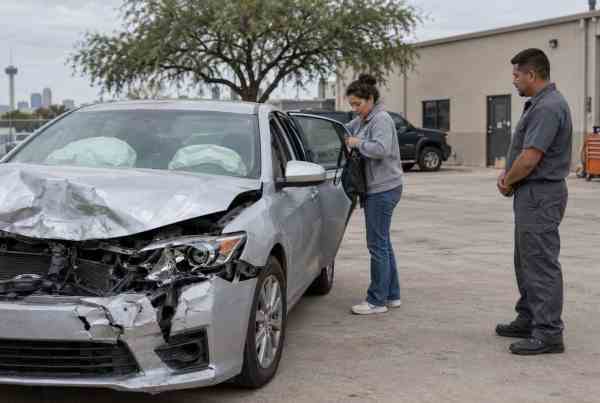
At a free written estimate, a 360 Collision technician inspects what can be seen without disassembling the vehicle. The damage is photographed panel by panel, and the estimate records the parts and the labor operations that visible damage calls for. That document becomes the basis of what gets submitted to your carrier.
For context on the numbers involved, the Insurance Information Institute reports that in 2024 the average collision claim was $5,489, and 4.16 percent of collision insurance policyholders had a claim. Your own repair can land well above or below that average, depending on the vehicle and the damage, which is exactly why the factors that drive collision repair cost matter more than any single figure. That first number is an accurate scope of visible damage. It is not a promise that nothing else exists, because nothing behind a closed panel can be measured before the panel comes off.
What to bring
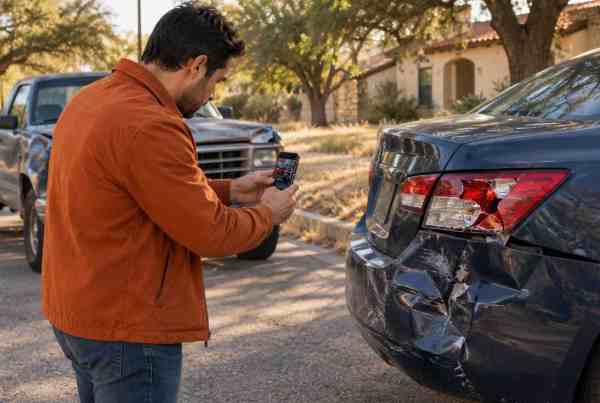
Bring the vehicle, your insurance information, a claim number if one has been issued, and a police report if one was filed. Add one item drivers rarely think of: any photos you took at the scene. Those are often the cleanest way to show that a bent bracket came from this collision rather than from something older.
What to ask before you leave
You are standing next to the person who will write the documentation, so five questions are worth asking out loud:
- Which lines on this estimate are visible damage, and which areas will only be known after teardown
- Will anything found after disassembly be photographed in place before it is moved
- Who contacts my insurance company about a supplement, the shop or me
- How will I be told if the scope of the repair changes
- What does the lifetime warranty cover on this repair
A shop that answers all five without hesitating has run this process many times.
What a Supplement Is, and Why It Appears After Teardown
Teardown is where the damaged area is disassembled so the structure underneath can be inspected. It is routine on anything beyond cosmetic damage, and it is the first moment anyone sees the full extent of a collision.
What turns up there is rarely exotic. A reinforcement bar crumpled behind an intact looking bumper cover. A bracket bent where the panel over it barely shows a crease. A sensor mount cracked while the housing looks fine. None of it is visible from the outside, so none of it could have been in the first estimate. Structural parts like these are covered in our frame repair service, and our guide to the signs of frame damage after an accident shows what drivers can spot on their own. When a sensor mount is involved, the repair usually ends with a calibration, which is why we explain when an ADAS scan is needed after a minor accident.
When the shop finds it, work stops on that area, the new damage is photographed in place, and the additional parts and labor operations go to the insurance company as a supplement. The original estimate is not thrown away. The supplement is added to it, which is why a completed repair can have more than one approved document behind it.
A supplement is not a second opinion, a renegotiation, or a price increase. It is a record of work that was always necessary and simply was not visible when the first number was written.
How the Adjuster Approves a Supplement
The insurance company reviews a supplement line by line, the way it reviewed the original estimate. An adjuster checks that each added operation is tied to this loss, that photo evidence supports it, that any part matches the vehicle, and that the labor hours fit the operation.
An answer comes back three ways. Approved as submitted. Approved in part, with certain lines held for more information. Or the adjuster asks to reinspect the vehicle in person while it is still apart, which is a normal step on a larger claim rather than a sign that anyone is being accused of anything.
Partial approval is not a dead end. Where a line is held, the shop can send additional photos, measurements, or the manufacturer repair procedure that calls for that operation. What should not happen is the supplemented work being performed before the insurer approves it, and holding that line is what keeps you from being billed for something the claim never agreed to cover.
What Slows a Supplement Approval Down
- Thin documentation. A line with no photograph behind it invites a question, and every question adds a round trip.
- Parts sourcing. A part that has to be ordered for a specific trim or build holds the repair no matter how fast the paperwork moved.
- Reinspection scheduling. When the adjuster wants to see the vehicle apart, the repair waits on a calendar rather than on a decision.
- Relaying through the driver. If the shop and the adjuster can only speak through you, every technical question becomes two calls instead of one.
- An incomplete first estimate. If the original scope was thin, the supplement carries more weight than it should and draws more scrutiny.
One of those is inside your control. Give the shop your claim number and carrier contact at the estimate appointment, and authorize the shop to speak with the adjuster directly. That single step removes the most common avoidable holdup.
Reading the Final Repair Bill
The final bill is the approved original estimate plus every approved supplement, and you can ask for the supplement documents themselves. Read the bill against the estimate you were given on day one: every line should appear either in that original estimate or in an approved supplement. If a line appears in neither, ask about it before you pay.
On an approved claim, your own responsibility is your deductible. An approved supplement is settled between the shop and the carrier, so the number of supplements a repair needed is not a number that lands on you.
How 360 Collision Handles the Supplement Stage
Our process keeps the documentation ahead of the questions:
- A free written estimate that documents the visible damage with photos
- Teardown findings photographed in place before anything is moved
- Supplements written with the parts, the labor operations, and the photo evidence attached
- Direct communication with your adjuster, so technical questions do not route through you
- I CAR Gold Class certified technicians, and a lifetime warranty on every repair
We work with State Farm, GEICO, Allstate, and other major carriers, and supplements are followed through to approval as part of the repair.
Getting Started
360 Collision is at 8803 Oakland Rd in San Antonio. Start with a free written estimate through our contact page.
Frequently Asked Questions
Because the first estimate could only price visible damage. Teardown exposes what sits behind the panels, and the shop reports it to your insurer as a supplement with photo evidence attached.
There is no fixed limit. A light repair may need none, while a structural job can need more than one as different areas are opened. Each supplement is documented and approved on its own.
A supplement is an updated estimate the shop sends to your insurance company after teardown reveals damage that could not be seen from the outside. It is added to the original estimate, not a replacement for it.
No. A supplement is a record of work that was always necessary and simply was not visible when the first estimate was written. Common examples are a crumpled reinforcement bar behind a bumper cover or a bent bracket under a panel.
The insurance company. The shop writes the supplement and sends the evidence, and the adjuster reviews it line by line and issues the approval before that portion of the work proceeds.
Work that was already authorized can continue. The supplemented work itself should wait for approval, which is what keeps you from being billed for something the claim never agreed to cover.
Partial approval is not a dead end. For any line that is held, the shop can send additional photos, measurements, or the manufacturer repair procedure that calls for that operation.
On a larger claim, an adjuster may ask to see the vehicle in person while it is still apart. It is a normal step, not a sign that anyone is being accused of anything, though the repair waits until the visit can be scheduled.
Ask which lines are visible damage, which areas will only be known after teardown, whether findings will be photographed in place, who contacts your insurer about a supplement, and how you will be told if the scope changes.
Bring the vehicle, your insurance information, a claim number if one has been issued, a police report if one was filed, and any photos you took at the scene.
Give the shop your claim number and carrier contact at the estimate appointment, and authorize the shop to speak with your adjuster directly. That removes the most common avoidable holdup.
On an approved claim, your own responsibility is your deductible. An approved supplement is settled between the shop and the carrier, and every line on the final bill should appear in the original estimate or an approved supplement.
Every Collision Repair Supplement Explained in Writing
Start with a free written estimate at 8803 Oakland Rd. We document the damage, follow every supplement, and talk to your adjuster.
Schedule Free EstimateOr call us: (210) 405-8817



3 Comments