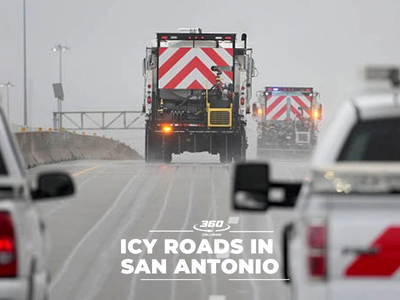

This past winter storm had a lot of us in San Antonio slowing down, checking on neighbors, and watching the roads carefully. As a mom, my first thought is always about safety — getting our kids where they need to go and making sure our families make it home in one piece. As a collision repair professional, though, I see another side of storms like this that most drivers do not.
When roads ice over, vehicles do things we are not used to. A car can slide at low speed, tap a curb, bump another vehicle in traffic, or drift just enough to stress parts underneath without leaving obvious damage. Many drivers brush it off. The car still starts. It still drives. There are no warning lights. So life moves on.
But winter weather collisions are different. Even minor incidents during icy conditions can shift alignment, stress suspension components, crack bumper supports, or knock safety sensors slightly out of position. Modern vehicles are built with precise systems that rely on everything being exactly where it should be. When something is just a little off, the car might still feel normal, but it is not operating at full safety.
At our shop, this is the time of year we often see vehicles come in weeks after a storm, when a driver starts noticing uneven tire wear, a vibration, a sensor acting strange, or steering that feels slightly different. Those small winter moments can turn into bigger problems if they are not checked.
This article is here to help you understand what winter road conditions can do to your vehicle, why “minor” does not always mean “no damage,” and when it makes sense to have your car looked at after icy driving.
After a storm like this, I always notice the same thing. People come in and say, “It wasn’t a real accident.” They slid a little turning into the neighborhood. The car bumped the curb when the brakes didn’t grab like they normally do. Maybe there was a soft tap in traffic when everyone was creeping along on ice. Nothing dramatic. No airbags. No huge dent. So it gets written off as “just one of those winter things.”
But cold weather changes how vehicles react. Tires get harder. Rubber seals stiffen. Plastic parts, especially bumpers and clips, become more brittle. When your car slides and makes contact in freezing conditions, the impact travels differently through the vehicle than it would on a warm day. Parts underneath can take the stress even if the outside looks fine.
I’ve seen cars where the bumper looked almost untouched, but the support behind it was cracked. I’ve seen alignments knocked just slightly out, enough that the driver doesn’t notice right away but the tires start wearing unevenly weeks later. On newer vehicles, even a small shift at the front end can affect cameras and sensors that help with braking, lane assist, and blind spot alerts. You may never see a warning light, but the system is not reading the road exactly the way it should.
As a mom, I think about this differently than I used to. It is not just about fixing a dent. It is about making sure the vehicle my family is riding in is doing what it is supposed to do if something unexpected happens. Winter driving already adds enough risk. You do not want hidden damage making things worse.
That is why after icy weather, I always tell people to pay attention to the little changes. Does the steering feel slightly off center. Is there a new vibration at highway speed. Does the car pull a bit when you let go of the wheel. Even small signs can point back to something that happened during those slick road days.
One of the biggest surprises for people is where the damage actually shows up. It is rarely the big obvious part. It is the quiet stuff underneath that tells the real story later.
After icy weather, we see a lot of suspension issues that started with a small slide. When a wheel hits a curb even at low speed, it can throw alignment off just enough to change how the car tracks down the road. You might not feel it right away, but over time you start to notice the steering wheel is not perfectly straight or the vehicle feels like it is working a little harder to stay in its lane. That is your car compensating.
Bumpers are another one. Modern bumpers are built to absorb energy, which is great for safety, but they are layered systems. The cover you see is just the outside. Behind it are reinforcements, brackets, and impact absorbers. In cold weather, those inner parts can crack or shift even when the outside looks almost fine. If that structure is weakened, the bumper cannot do its job properly in the next impact.
Then there are the safety systems most of us do not think about. Cameras, radar units, parking sensors, and other electronics are mounted in very specific positions. A slight shift from a winter slide or minor collision can change the angle just enough to affect how they read the world around you. You may still see the features working, but they might not be as accurate as they should be. When we are talking about automatic braking or blind spot alerts, accuracy matters.
I have also seen cases where the undercarriage takes a hit. Ice hides things. A chunk of frozen debris, a raised piece of pavement, or a curb edge you could not see can contact parts under the vehicle. Splash shields, lines, and mounts can get stressed without you realizing it. Those are not the things you check in the driveway.
None of this is meant to scare anyone. It is just the reality of how vehicles behave when weather and road conditions are not normal. Most of the time, the fix is straightforward when it is caught early. The key is not ignoring the “it feels a little different” moment after a storm.
When It Makes Sense to Have Your Vehicle Checked
After weather like we just had, the biggest thing I tell people is to trust that small voice that says something feels different. You do not need a major accident or a dashboard warning light to justify having your vehicle looked at. Winter road conditions create situations where minor slides, soft impacts, or hidden contact with a curb or debris can stress parts of the vehicle you cannot see.
If your steering feels slightly off, if you notice a vibration that was not there before, if the vehicle pulls a little to one side, or if safety features like cameras or sensors seem inconsistent, those are all good reasons to have an inspection done. Even something as simple as a low speed curb tap during icy conditions can affect alignment, suspension components, or the mounting points for safety systems.
A professional inspection helps confirm that everything underneath is where it should be and working the way it was designed to. It is also an opportunity to catch small issues early before they lead to uneven tire wear, suspension problems, or safety systems that are not reading the road correctly.
If you have questions about collision damage, alignment concerns, or how modern safety systems are checked after an impact, you can learn more about those topics on our site or speak with our team directly. Getting clear answers early gives you peace of mind and helps make sure your vehicle is ready for everyday driving again.
Keeping San Antonio Families Safe After the Storm
Winter weather is not something we deal with often here, which is why it catches so many drivers off guard. One day the roads are normal, the next they are icy, and suddenly even a careful driver can find themselves sliding a little or making contact they never expected. It happens fast, and most of the time people are just thankful no one was hurt.
From my side of things, both as a mom and as someone who works on collision repairs every day, I think about what happens after the storm clears. Your car is still your daily ride. It still takes your kids to school, gets you to work, and carries your family everywhere you need to go. Making sure it is truly safe after unusual road conditions is just part of taking care of the people inside it.
That does not mean assuming the worst. It simply means paying attention and being willing to ask questions if something does not feel right. Vehicles are designed with a lot of safety built in, but they also rely on everything being aligned, mounted correctly, and functioning the way it should. A quick check can go a long way toward making sure your car is ready for normal driving again.
If the storm left you with concerns, questions, or just a feeling that your vehicle is not quite the same, it is okay to have it looked at. Getting clear information helps you make confident decisions and keeps small issues from turning into bigger ones later.
_
If your vehicle slid, bumped something, or just feels a little different after the recent winter weather, you do not have to figure it out on your own. A professional inspection can help confirm everything is safe and working as it should.
At 360 Collision, we focus on careful evaluations, clear explanations, and helping San Antonio drivers understand what is going on with their vehicles. Whether it turns out to be nothing or something that needs attention, having it checked gives you peace of mind.
If you have questions or would like your vehicle looked at after the storm, our team is here to help.