
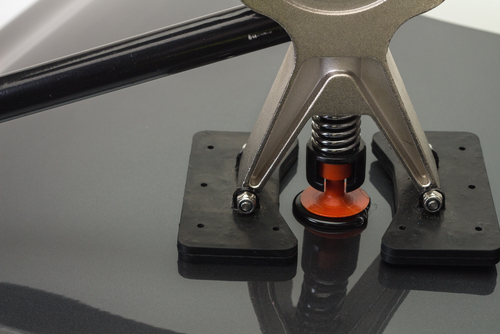

How does paintless dent repair work? A trained technician reaches the back of the dented panel and uses specialized tools to massage the metal slowly back to its original shape, so the factory paint stays in place and no filler, sanding, or repainting is needed.
This guide explains what paintless dent repair is, walks through the repair step by step, shows which dents it can and cannot fix, and covers hail damage, timing, price factors, and insurance for San Antonio drivers. It leans on the Texas Department of Insurance auto insurance guide for the rules that apply when a claim is involved.
Key Takeaways
- Paintless dent repair (PDR) removes a dent by reshaping the metal from behind the panel, with no filler, sanding, or repainting.
- It works best when the paint is intact and a technician can reach the back of the dent.
- The work is slow and careful, and the panel is checked under a specialized light before the repair is called done.
- Hail is a common reason Texas drivers choose PDR, and insurance claims for it usually carry a deductible.
- A free written, itemized estimate tells you whether your dent qualifies before you commit to anything.
What Is Paintless Dent Repair?
Paintless dent repair (PDR), also called paintless dent removal, is a repair method that removes a dent by pushing the metal back into shape from behind the panel. It does not use body filler, sanding, primer, or new paint, so the original finish stays on the car. It is used for door dings, hail dents, and many small to medium dents from parking lots and minor impacts, as long as the paint has not broken.
Paintless dent repair versus traditional dent repair
Traditional dent repair works on the outside of the panel. The area is sanded, sometimes filled, primed, painted, and blended into the surrounding paint. PDR skips those steps, which is why it is often faster and often costs less, although both depend on the size, depth, and number of dents.
| Feature | Paintless dent repair | Traditional dent repair |
|---|---|---|
| Paint | Original factory finish stays on the panel | Area is sanded, primed, painted, and blended |
| Filler | None | May be used on deeper dents |
| Best suited to | Dents with intact paint and a reachable backside | Cracked paint, sharp creases, and stretched metal |
| Time | Often shorter, depending on the number of dents | Often longer, because paint work adds steps |
| Cost | Often lower, depending on size and count | Often higher, because of paint and labor |
Why keeping the factory paint matters
When the original finish can stay, there is nothing to color match later and no repainted edge to blend. That is the main reason many drivers ask for PDR first, and it is why a technician checks the paint before anything else. Our guide to the top benefits of paintless dent repair covers the advantages in more detail.
How Does Paintless Dent Repair Work, Step by Step?
The idea is the same on every vehicle, but the time it takes depends on the dent. Here is the sequence a technician follows.
- Assess the damage. The technician checks the size, depth, and location of the dent and looks closely at the paint. This is where the decision is made on whether PDR is a suitable option for that specific dent.
- Gain access to the back of the panel. To reach the dent, the technician may remove interior trim, a panel liner, or another access point. This allows pressure to be applied from behind without disturbing the exterior paint.
- Massage the dent out. Using metal rods and other specialized tools, the technician pushes the metal up in many small movements, working from the outer edge of the dent toward the center.
- Check the panel under a specialized light. The reflection of the light shows low spots and high spots that are hard to see in daylight. The technician keeps adjusting until the reflection runs straight across the panel.
- Reassemble and inspect. Any trim or liner that was removed goes back on, and the repaired area gets a final inspection before the vehicle is returned.
What the technician is watching for
PDR is a patience job. Metal that is pushed too far creates a high spot, so the work is done in many small steps instead of one big push. The goal is a panel where the reflection looks the same as the paint around it.
When the backside is hard to reach
Some panels have bracing or double-layer areas behind the dent. In those cases a technician may use extra access points or a different pulling technique, and some dents in those spots may not qualify for PDR at all. The technician tells you which applies after looking at the panel.
Which Dents Can Paintless Dent Repair Fix?
Dents that usually qualify
- Door dings and small, round dents
- Hail dents where the paint is still intact
- Shallow dents from parking lots and minor impacts
- Dents on cars, trucks, and SUVs where the back of the panel can be reached
Dents that usually need traditional repair
- Paint that is cracked, chipped, or scratched through
- Sharp creases or stretched metal
- Dents along a panel edge or body line, where the metal is harder to reshape
- Collision damage that bent the structure behind the panel
Why the paint decides it
PDR leaves the finish alone, so it cannot fix a finish that is already broken. If a chip or scratch has exposed bare metal, that needs paint work no matter how the dent is removed. Our guide on why you should not ignore small car damage in San Antonio explains what happens to exposed metal in our heat and humidity.
Hail Damage and Paintless Dent Repair in San Antonio
Texas recorded 902 major hail events in 2025, more than any other state, according to the Insurance Information Institute hail statistics page, which cites NOAA Storm Prediction Center data. In that data a major event means hailstones one inch in diameter or larger.
Hail typically leaves many small, round dents across the hood, roof, and trunk, and the paint often stays intact. That is the situation PDR was built for. Whether it works on your vehicle depends on how many dents there are and how deep they go. See our hail damage repair service for how the shop handles storm damage, and our hail damage repair cost breakdown for what drives the price.
How Long Does Paintless Dent Repair Take, and What Affects the Price?
Repair time depends on the extent of the damage. Minor dent repairs may take 1-3 days at 360 Collision, and a vehicle with many hail dents takes longer. We provide a timeline estimate when you bring your vehicle in.
What changes the price
- Size and depth of each dent
- How many dents there are
- Where the dent sits on the panel, since edges and body lines are harder
- Whether the technician has good access to the back of the panel
- The condition of the paint
We do not guess a price from a photo description. For typical ranges and the factors behind them, read our guide to paintless dent repair cost in San Antonio.
Does Insurance Pay for Paintless Dent Repair?
It depends on how the dent happened and what coverage you carry. The Texas Department of Insurance lists hail damage among the losses that comprehensive coverage typically pays for, and it notes that you must pay a deductible on collision and comprehensive claims. If the repair costs less than your deductible, paying out of pocket may make more sense. Our guide on whether to pay out of pocket or file a claim walks through that decision.
You choose the shop
In Texas you have the legal right to choose any licensed repair shop. The Texas Department of Insurance says a company might offer a list of preferred shops but cannot require you to use one. A reputable shop works with your insurer either way, and our overview of how collision repair insurance claims work in San Antonio shows what to expect.
Paintless Dent Repair at 360 Collision in San Antonio
360 Collision is at 8803 Oakland Rd in San Antonio, open Monday to Friday, 7:30 AM to 5:30 PM. Here is what you get when you bring in a dent:
- A free, no-obligation written, itemized estimate, with walk-ins welcome during business hours for estimates
- An I-CAR Gold Class certified repair facility with ASE-certified technicians
- A lifetime warranty on workmanship for as long as you own the vehicle
- Direct work with State Farm, USAA, Allstate, Geico, Progressive, and other major carriers
- A technician who tells you whether PDR fits your dent or whether it needs traditional repair
You can read about our dent repair services or request a free written estimate through our contact page. If you want to see how the technique developed, our piece on the evolution of dent repair technology tells that story.
Frequently Asked Questions
Paintless dent repair (PDR) is a method of removing a dent by reshaping the metal from behind the panel with specialized tools. It uses no body filler, sanding, or new paint, so the original finish stays on the car.
A technician reaches the back of the dented panel, then massages the metal back into shape with rods and other specialized tools in many small movements. The panel is checked under a specialized light before the repair is finished.
Yes. Paintless dent repair and paintless dent removal are two names for the same method, and PDR is the common abbreviation for both.
Not when the paint is intact, because the technician works on the metal from behind and does not touch the finish. If the paint is already cracked or chipped, PDR may not be the right repair.
It typically works on door dings, hail dents, and small to medium dents from parking lots or minor impacts, as long as the paint has not broken and the technician can reach the back of the dent.
Often, yes. Hail usually leaves many small, round dents, and when the paint is intact a technician can often work them out one at a time. A technician decides after looking at the vehicle.
Cracked, chipped, or scratched-through paint, sharp creases, stretched metal, and damage that bent the structure usually need traditional repair. A technician makes the final call after inspecting the panel.
Repair time depends on the extent of the damage. Minor dent repairs may take 1-3 days at 360 Collision, while a vehicle with many hail dents takes longer. We provide a timeline estimate when you bring your vehicle in.
The price depends on the size, depth, location, and number of dents, and on whether the technician has good access to the back of the panel. We give you a free, written, itemized estimate after looking at the dent.
It depends on how the dent happened and what coverage you carry. Hail damage is typically handled under comprehensive coverage and collision damage under collision coverage, and a deductible usually applies to both.
No. The Texas Department of Insurance says a company might offer a list of preferred shops but cannot require you to use one. You can choose the licensed shop you trust.
Yes. Every repair we complete is backed by a lifetime warranty on workmanship for as long as you own the vehicle.
Find Out if Your Dent Qualifies for Paintless Repair
Bring your vehicle to 8803 Oakland Rd for a free written, itemized estimate. A technician looks at the dent, checks the paint, and tells you whether paintless repair fits.
Schedule Free EstimateOr call us: (210) 405-8817




One Comment