


When It Makes Sense to Pay Out of Pocket
Sometimes, paying for the repair yourself really is the smarter move. I’ve had plenty of customers come in, worried that they’re making a mistake by skipping the insurance claim—only to breathe a sigh of relief when they see the actual numbers. Here’s the truth: if the cost of the repair is close to—or less than—your deductible, filing a claim often doesn’t help. Let’s say your deductible is $1,000 and the damage comes in around $1,200. Insurance might cover $200, but they still open a claim on your record. Depending on your provider, that could affect your rates. And if you’re planning to switch carriers in the next year or two? That little claim might follow you and drive your premiums up anyway. There are also folks who just prefer to keep things simple. No adjusters. No paperwork. No waiting around to see if the repair will be “approved.” You come in, we give you a clear estimate, and you’re back on the road—usually quicker than if you’d gone the insurance route. I once had a customer with a cracked rear bumper. Their deductible was $750, and our quote was $820. After we explained both options, they chose to pay out of pocket—and we had their car repaired and cleaned up in two days. No red tape, no claim on file. Also, if you’re dealing with something more cosmetic than critical—like a small dent from a parking lot or light scratches on the side door—insurance may not even cover it depending on your policy. In those cases, we’ll always walk you through your options honestly, even if that means not using us at all. So, when does it make sense to pay out of pocket?- When your repair cost is less than (or barely over) your deductible
- When you want to avoid a claim on your record
- When it’s a minor repair you can easily budget for
- When you want more control over the shop you choose
When Insurance Might Be the Better Option
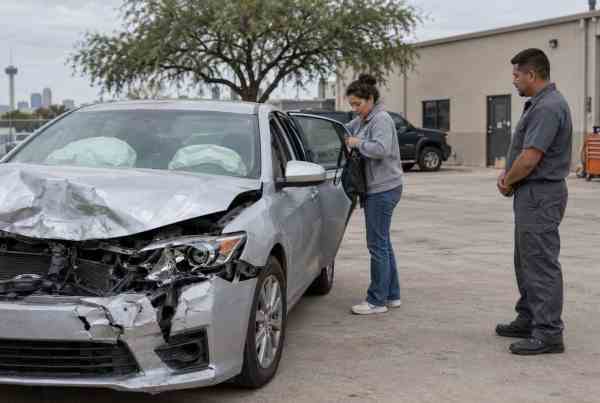
There are definitely times when using your insurance isn’t just the better choice—it’s the necessary one. Every now and then someone comes in with a side panel dent or a cracked bumper and says, “I’m hoping this is still in the few-hundred-dollar range.” But after the inspection, it turns out the damage went deeper than expected—maybe the impact bent the inner structure or affected a sensor in the bumper that helps with backup detection. Suddenly that $500 repair is looking more like $2,500. That’s where insurance is designed to help. If you’ve been paying your premiums month after month, this is exactly why. And if the damage is extensive, insurance can save you from a major out-of-pocket burden. Here are some specific situations where filing a claim is almost always the right move:- The repair cost is significantly higher than your deductible.
- If your deductible is $500 or $1,000 and the total repair estimate comes out to $3,000 or more, the math usually works in your favor. Even after paying your part, insurance will absorb the bulk of the cost.
- There’s frame damage or structural impact.
- When there’s been an accident that affected your vehicle’s structure—like frame bending, wheel alignment issues, or anything safety-related—insurance is the safer route. These are complex, costly repairs that shouldn’t be delayed or done halfway.
- You’re dealing with cracked glass, airbags, or other safety systems.
- Windshield damage may look small at first, but if the crack is spreading or near the edge, you’ll likely need a full replacement—and insurance usually covers that (less your deductible).
- The same goes for airbag deployment, damaged sensors (like ADAS), or electrical failures—which often result from even low-speed impacts and can cost thousands to address properly.
- Someone else was at fault.
- If another driver caused the damage—even if they offer to pay out of pocket—it’s usually best to get their insurance information and file a claim.
Why? Because:
- You’ll have documented coverage if problems show up later
- You won’t be left chasing someone down for reimbursement
- You’ll have access to rental reimbursement, which many policies include
- If another driver caused the damage—even if they offer to pay out of pocket—it’s usually best to get their insurance information and file a claim.
Why? Because:
- Your car is leased or financed.
- If your vehicle is leased or still under loan, your lender likely requires that repairs be done professionally and documented through insurance. Skipping the claim could violate your agreement.
Let’s Talk Deductibles: What Are You Actually Paying For?
Deductibles trip up a lot of people—and that’s not your fault. Insurance paperwork isn’t exactly written in plain English. But understanding your deductible is one of the biggest factors in deciding whether to file a claim or handle repairs out of pocket. So let’s simplify it. Your deductible is the amount you agree to pay before your insurance kicks in. If your deductible is $500, you’re responsible for the first $500 of any covered repair. After that, your insurance pays the rest—up to your policy’s limits. But here’s the part people don’t always realize: If the cost of the repair is less than your deductible, your insurance won’t pay a dime—even if the repair is technically covered. That’s why getting a repair estimate first is so important. You might think you’re in for a $2,000 repair, but if it comes in closer to $650 and your deductible is $1,000, you’ll be footing the full bill either way. Here’s a simple breakdown of how it usually works:| Repair Estimate | Deductible | Insurance Pays | You Pay |
| $1,200 | $500 | $700 | $500 |
| $850 | $1,000 | $0 | $850 |
| $3,000 | $1,000 | $2,000 | $1,000 |
Will Filing a Claim Raise My Insurance Rates?
This is the part that makes most people hesitate: “If I file a claim, is my premium going to shoot up?” The honest answer? It depends. Not all claims affect your rates equally. It comes down to the type of claim, who was at fault, your driving history, and the policies of your individual provider. But let’s break down what we’ve seen from real-world experience helping San Antonio drivers navigate this process:You’re more likely to see a rate increase if:
- You were at fault in the accident
- You’ve filed multiple claims in the past 2–3 years
- The repair was expensive and required a full claim payout
- Your insurance company classifies the damage as “preventable”
You’re less likely to see a rate increase if:
- It was your first claim in years
- You weren’t at fault (and can prove it)
- You have accident forgiveness built into your policy
- The repair cost was low and only slightly above your deductible
What If the Other Driver Offers to Pay?
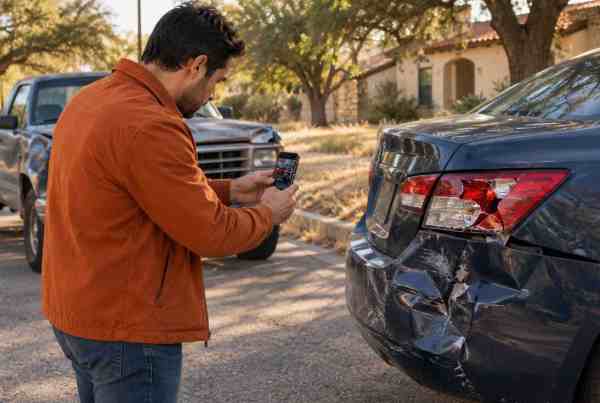
It happens more often than you’d think. You get tapped in a parking lot or clipped at a red light, and the other driver hops out and says something like, “Let’s just keep insurance out of this—I’ll pay for the damage.” And look, sometimes that works out. The driver is responsible, honest, and genuinely wants to avoid a claim. But here’s what I always tell people—there’s a big difference between an apology and accountability. If you agree to handle the damage privately, you’re putting a lot of trust in a stranger—and that trust can fall apart quickly if:- The driver ghosts you after you get the estimate
- They dispute the amount or refuse to pay the full cost
- Your car turns out to have more damage than you originally thought
- There’s no written agreement or claim on file
- Still collect their full contact and insurance information—just in case
- Take photos of both vehicles, the damage, and the license plate
- Ask them to sign a short agreement or acknowledgment that they’re accepting responsibility (we can help provide a basic template if needed)
- Get a professional estimate right away so you have real numbers in hand
Why San Antonio Drivers Trust 360 Collision (Insurance or Not)
We’ve worked with every kind of situation over the years—from big insurance jobs to quiet, no-fuss out-of-pocket repairs. And no matter how you choose to pay, our approach doesn’t change. We believe in clear communication, honest estimates, and high-quality work that makes you feel confident when you drive off. There’s no pressure to file a claim. No upselling. Just real answers and a team who treats you with respect, like we would our own family. Here’s what you can expect when you come to 360 Collision:- An honest repair estimate—no surprises. We’ll tell you what it’s going to take, and whether it’s worth involving insurance at all.
- Guidance through the insurance process (if you choose that route). We know how to talk to adjusters, we work with all major carriers, and we’ll handle the back-and-forth so you don’t have to.
- Fast, professional repairs. Whether it’s paintless dent removal, windshield repair, bumper work, or something more serious—we do it all under one roof, with care.
- Quality craftsmanship backed by a limited lifetime warranty. Because we take pride in what we do, and we want your vehicle to look—and drive—like it should.
- A local team that actually listens. We’re not a chain, and you won’t get shuffled around or handed off to a call center. We’re here, in San Antonio, and we care.
⭐⭐⭐⭐⭐ “Great customer service and love the quality of work. I have a car that I want to revive the paint job and fix some minor scratches/small dings to make it look like new again.” — Juan G Martinez, Local GuideWhether it’s a new bump or an older vehicle you’re bringing back to life, we treat every car like it’s something worth taking pride in.
The Bottom Line: When It Makes Sense—And What to Do Next
If you’re staring at your car trying to decide whether to file a claim or just take care of it yourself, you’re not alone—and there’s no shame in not knowing the “right” answer right away. Because the truth is, there isn’t one answer that fits everyone. It depends on your deductible, the extent of the damage, your insurance history, and—let’s be honest—how much patience you have for paperwork and adjusters. But what we can promise is this: when you bring your car to 360 Collision, we’ll give you the facts.- We’ll inspect your vehicle carefully
- Give you a detailed, transparent estimate
- Talk through whether it makes more sense to file or pay out of pocket
- And let you decide—no pressure, no scare tactics, just straight-up advice
Contact us today!
Frequently Asked Questions
It often makes sense when the repair cost is close to or under your deductible, when it is a minor repair you can budget for, when you want to avoid a claim on your record, or when you want more control over which shop does the work.
It can. Even a small claim gets recorded, and depending on your carrier, that record can affect your premium, especially if you are planning to switch providers in the next year or two.
Not always. Coverage for minor cosmetic damage depends on your specific policy, which is why it is worth asking your carrier directly before deciding.
Your deductible is the amount you pay before insurance covers the rest. If the repair cost is close to or under that amount, filing a claim may not save you much, since insurance would only cover the difference while still opening a claim on your record.
Filing a claim is usually the better move when the repair cost is significantly higher than your deductible, when there is frame or structural damage, or when the damage involves safety systems like airbags, sensors, or cracked glass.
Frame damage, wheel alignment issues, and other structural impacts are complex, costly repairs that affect the vehicle’s safety, which is why insurance is generally the safer route for that type of damage.
It can. A crack that is spreading or near the edge often means a full windshield replacement is needed, and insurance usually covers that cost, less your deductible.
In most cases it is best to get their insurance information and file a claim, since that gives you documented coverage, avoids you having to chase reimbursement yourself, and may include access to rental reimbursement depending on the policy.
If your vehicle is leased or still under loan, your lender likely requires that damage be reported and repaired through insurance, so it is worth checking your loan or lease terms before deciding to pay out of pocket.
Yes. Damage that looks minor on the outside, such as a dent or cracked bumper, can sometimes affect a sensor or the vehicle’s inner structure, which turns a smaller repair estimate into a larger one once it is fully inspected.
It is usually still worth getting their insurance information, even if they offer to pay directly, so you have documented coverage in case additional damage shows up later.
Yes. We will walk you through your options honestly based on what the inspection finds, so you can decide what fits your situation, whether that means paying out of pocket or filing a claim.



One Comment